
Introduction
When planning for the future, one of the considerations many people face is how to cover the costs associated with their final arrangements. Two common options that arise are burial insurance and final expense plans. While they may seem similar, there are distinct differences between the two that can impact your decision. This blog post will explore the key distinctions to help you understand which option might be best for you.
What is Burial Insurance?
Burial insurance is a type of life insurance policy specifically designed to cover the costs of a funeral and burial. It is typically a whole life policy, which means it provides coverage for the entire life of the insured person, as long as the premiums are paid.
Key Features of Burial Insurance:
- Small Death Benefits: These policies usually offer smaller death benefits, often ranging from $5,000 to $50,000.
- Level Premiums: The premiums remain the same throughout the life of the policy.
- Immediate Coverage: There is typically no waiting period before the policy is in effect.
- Simplicity: The application process is often straightforward with few health questions.
What is Final Expense Insurance?
Final expense insurance, also known as burial insurance, is broader in scope. It is designed to cover not only the costs of a funeral and burial but also any remaining expenses that may arise after a person’s death, such as outstanding debts, medical bills, or estate settlement costs.
Key Features of Final Expense Insurance:
- Higher Death Benefits: These policies can offer higher death benefits, often up to $50,000 or more.
- Flexible Premiums: Premiums can be level or increasing, depending on the policy.
- Potential Waiting Periods: Some policies may have a waiting period before coverage is effective.
- Health Underwriting: There may be health underwriting involved, which could affect eligibility and premiums.
Key Differences
Purpose:
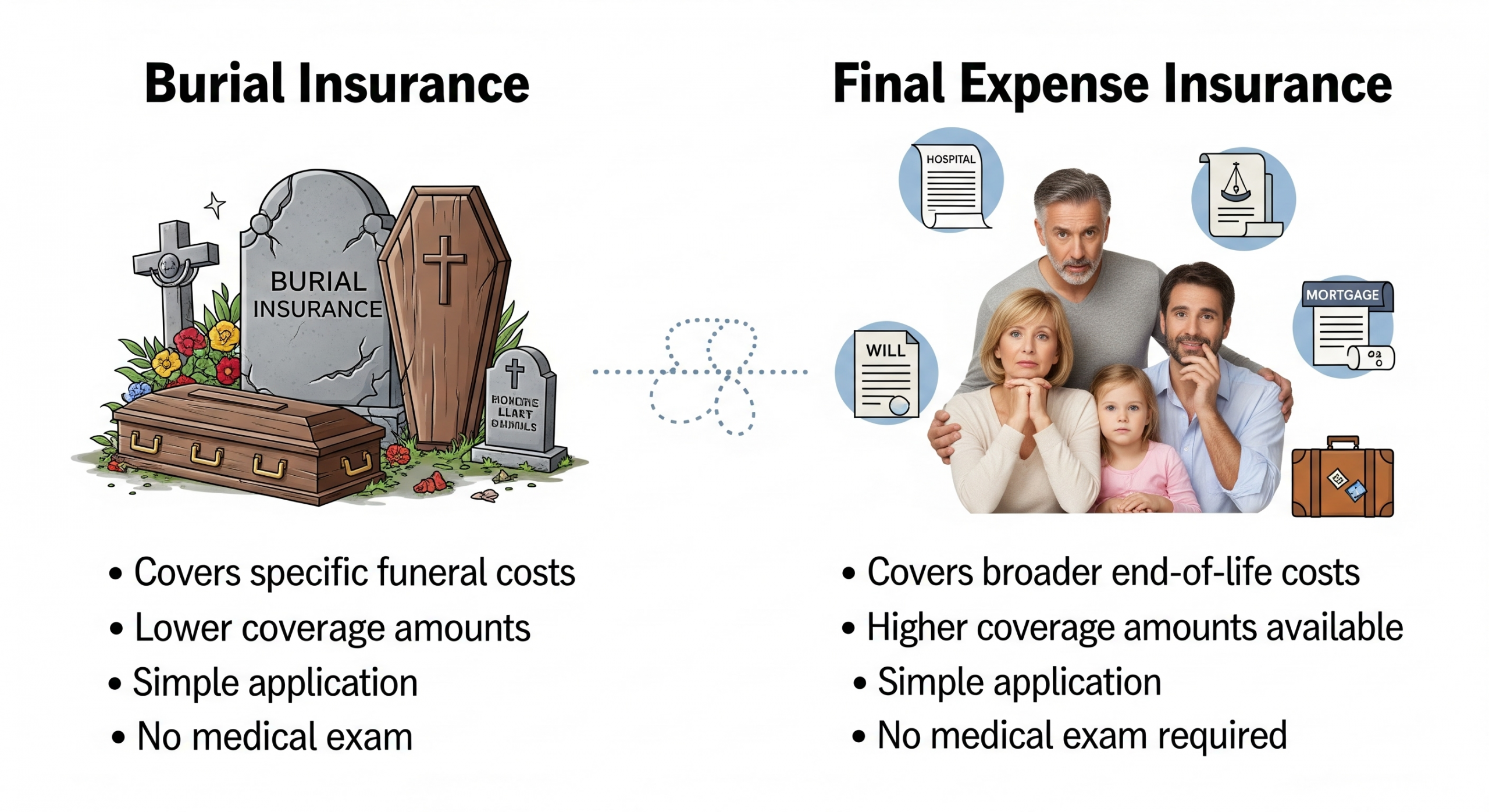
- Burial Insurance is specifically for funeral and burial costs.
- Final Expense Insurance covers funeral and burial costs plus other final expenses.
Coverage Amount:
- Burial Insurance typically offers smaller death benefits.
- Final Expense Insurance can offer higher death benefits.
Premiums:
- Burial Insurance usually has level premiums.
- Final Expense Insurance may have level or increasing premiums.
Health Requirements:
- Burial Insurance often has minimal health requirements.
- Final Expense Insurance may have more stringent health underwriting.
Waiting Periods:
- Burial Insurance generally has no waiting period.
- Final Expense Insurance may have a waiting period.
Conclusion
The choice between burial insurance and final expense insurance depends on your specific needs and financial situation. If you’re looking to cover only the costs of a funeral and burial, burial insurance might be sufficient. However, if you want to ensure that all final expenses are covered, final expense insurance could be a better fit. It’s important to carefully consider your options and consult with a financial advisor or insurance professional to make the best decision for your circumstances.