How to Enroll in Medicare in Florida: Step-by-Step Guide
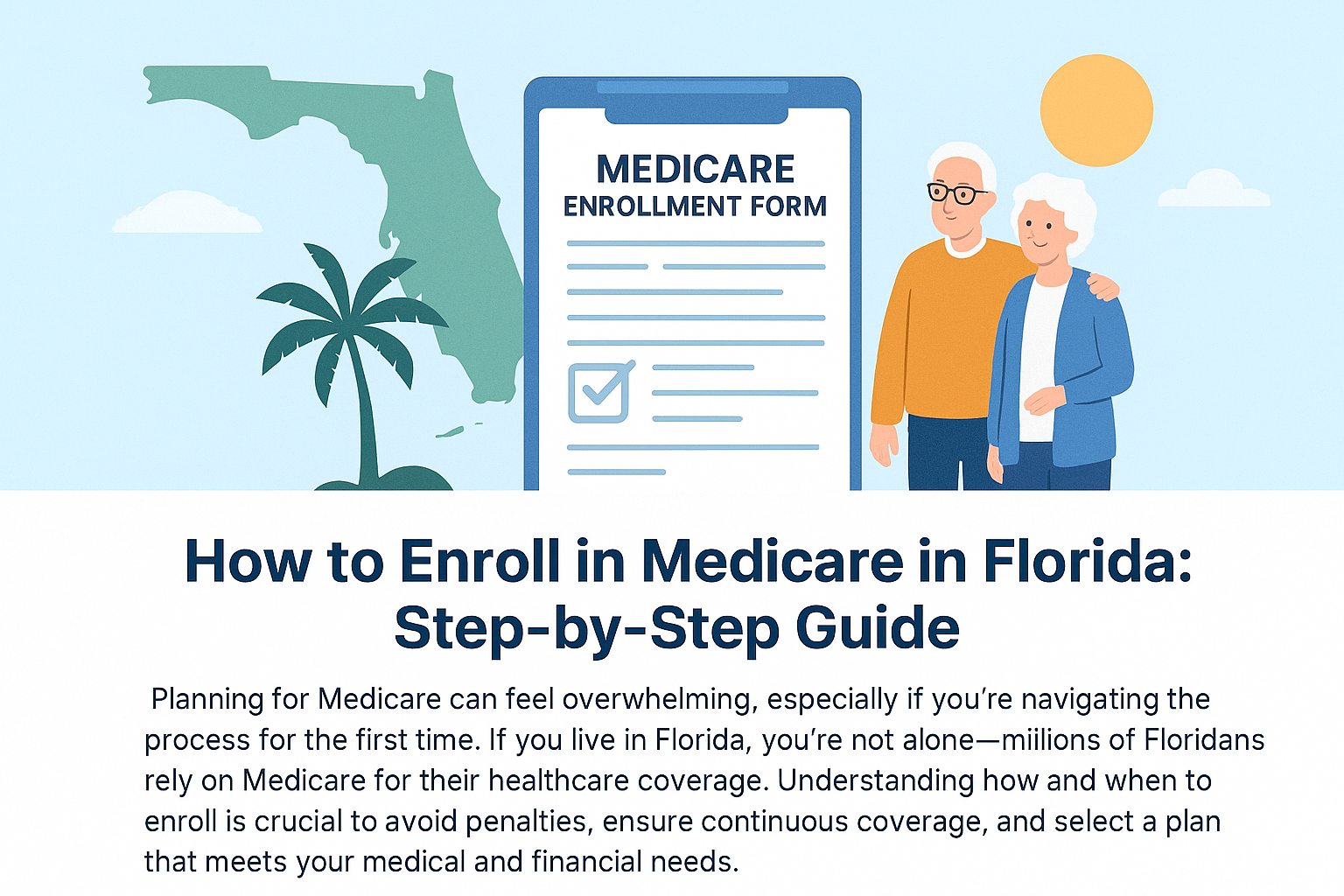
Planning for Medicare can feel overwhelming, especially if you’re navigating the process for the first time. If you live in Florida, you’re not alone—millions of Floridians rely on Medicare for their healthcare coverage. Understanding how and when to enroll is crucial to avoid penalties, ensure continuous coverage, and select a plan that meets your medical and financial needs.
This step-by-step guide will walk you through everything you need to know about enrolling in Medicare in Florida, including eligibility, timelines, plan options, and common mistakes to avoid.
Understanding Medicare Basics
What is Medicare?
Medicare is a federal health insurance program primarily designed for people aged 65 and older, though certain younger individuals with disabilities or specific conditions (like End-Stage Renal Disease) also qualify. It covers hospital stays, medical services, prescription drugs, and other healthcare needs, depending on which part of Medicare you choose.
Who is Eligible for Medicare in Florida?
You may qualify for Medicare in Florida if you:
- Are 65 years or older
- Have received Social Security Disability benefits for at least 24 months
- Have Amyotrophic Lateral Sclerosis (ALS) or End-Stage Renal Disease (ESRD)
Different Parts of Medicare (A, B, C, D)
- Part A (Hospital Insurance): Covers inpatient hospital stays, nursing facilities, hospice, and some home healthcare.
- Part B (Medical Insurance): Covers doctor visits, outpatient care, preventive services, and medical equipment.
- Part C (Medicare Advantage): Combines Parts A and B, often with added benefits like dental, vision, and hearing.
- Part D (Prescription Drug Coverage): Helps cover the cost of medications.
When to Enroll in Medicare in Florida
Initial Enrollment Period
Your Initial Enrollment Period (IEP) starts three months before your 65th birthday, includes your birthday month, and ends three months after. That’s a 7-month window to sign up without penalties.
Special Enrollment Periods
You may qualify for a Special Enrollment Period (SEP) if you:
- Lose employer coverage
- Move out of your plan’s service area
- Experience other life changes (e.g., Medicaid eligibility)
General Enrollment Period
If you miss your IEP and don’t qualify for an SEP, you can enroll during the General Enrollment Period (January 1–March 31 each year), though late penalties may apply.
Step-by-Step Guide to Enroll in Medicare in Florida
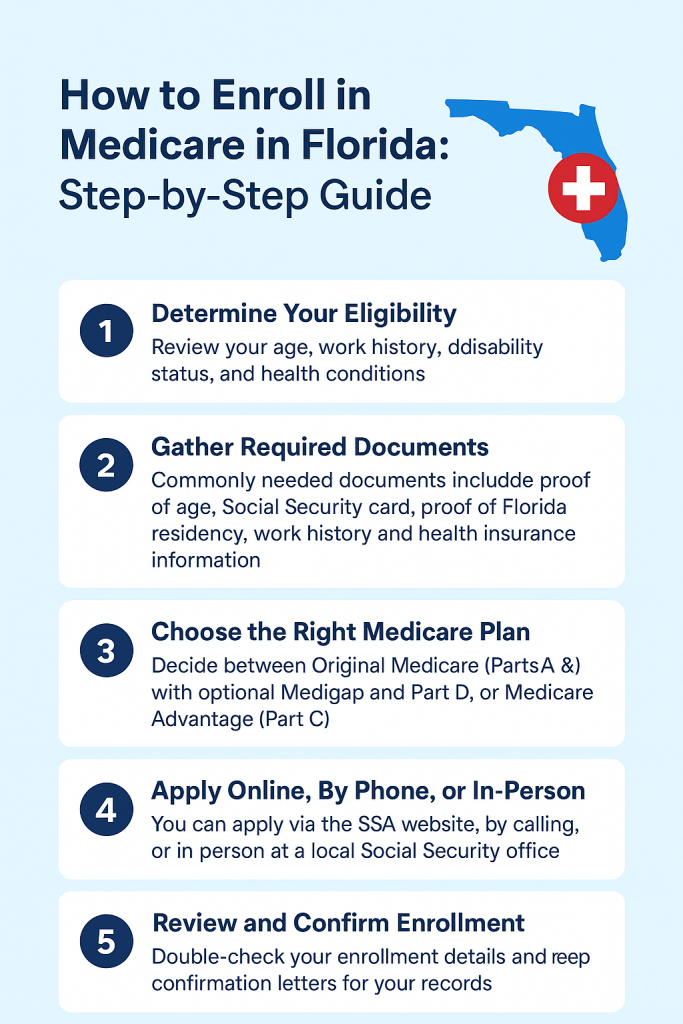
Step 1: Determine Your Eligibility
Review your age, work history, disability status, and health conditions to confirm eligibility.
Step 2: Gather Required Documents
Commonly needed documents include:
- Proof of age (birth certificate or passport)
- Social Security card
- Proof of Florida residency
- Work history and health insurance information
Step 3: Choose the Right Medicare Plan
Decide between:
- Original Medicare (Parts A & B) with optional Medigap and Part D
- Medicare Advantage (Part C), which bundles coverage
Step 4: Apply Online, By Phone, or In-Person
You can apply via:
- SSA Website (most convenient)
- Phone: 1-800-772-1213
- Local Social Security office (appointment recommended)
Step 5: Review and Confirm Enrollment
Double-check your enrollment details and keep confirmation letters for your records.
Ways to Apply for Medicare in Florida
- Applying Online: Visit the Social Security Administration website for the quickest method.
- Applying by Phone: Call SSA directly.
- Applying in Person: Visit your local Social Security office.
Florida-Specific Medicare Options
Florida offers many Medicare Advantage and Medigap plans with competitive benefits. Some include dental, vision, hearing, and fitness programs.
FAQs About Medicare Enrollment in Florida
Q1: Can I enroll in Medicare before 65 in Florida?
Yes, if you have certain disabilities, ALS, or ESRD.
Q2: Do I need to apply for Medicare if I’m already receiving Social Security?
No, you’ll be automatically enrolled in Parts A and B.
Q3: How long does Medicare enrollment take in Florida?
Most applications are processed within 2–4 weeks.
Q4: Can I change Medicare plans after enrolling?
Yes, during the Annual Enrollment Period (Oct 15–Dec 7).
Q5: What happens if I miss my Medicare enrollment deadline?
You may face late penalties and delayed coverage.
Q6: Are there Medicare savings programs in Florida?
Yes, programs like QMB, SLMB, and QI help with costs for eligible individuals.
Conclusion: Secure Your Medicare Coverage in Florida
Enrolling in Medicare in Florida doesn’t have to be complicated. By understanding eligibility, important deadlines, and plan options, you can make confident choices about your healthcare coverage. Whether you prefer Original Medicare or Medicare Advantage, the key is to enroll on time and choose the plan that best fits your needs.